How to Ship a Car to Another State: Cost, Steps and Timing
Compare your options, check the carrier and prepare your car before pickup.

To ship a car to another state, you book an auto transport company, hand the car to a truck driver at pickup, and inspect it when it is delivered. Kelley Blue Book’s January 2026 quotes for a midsize sedan on an open carrier averaged $751 for 500 miles, $1,020 for 1,000 miles and $1,406 for 2,500 miles. Most shipments take from a few days to three weeks, depending on distance.
This guide covers the cost, the steps, how to check a company before you pay, and when driving the car yourself is the better choice.
How much does it cost to ship a car to another state?
A common rule of thumb is about $1 per mile for a 1,000-mile trip. Shorter trips cost more per mile and longer trips cost less per mile.
| Distance | Quote range | Average | Per mile |
|---|---|---|---|
| 500 miles | $650 to $890 | $751 | $1.50 |
| 1,000 miles | $800 to $1,350 | $1,020 | $1.02 |
| 2,500 miles | $1,050 to $1,800 | $1,406 | $0.56 |
Source: Kelley Blue Book, January 2026. Quotes from eight companies for a 2025 Honda Accord on an open carrier. Your quote will differ.
Seven things move the price up or down:
- Distance. The total rises with miles, while the per-mile rate falls.
- Vehicle size and weight. Trucks and large SUVs cost more than sedans.
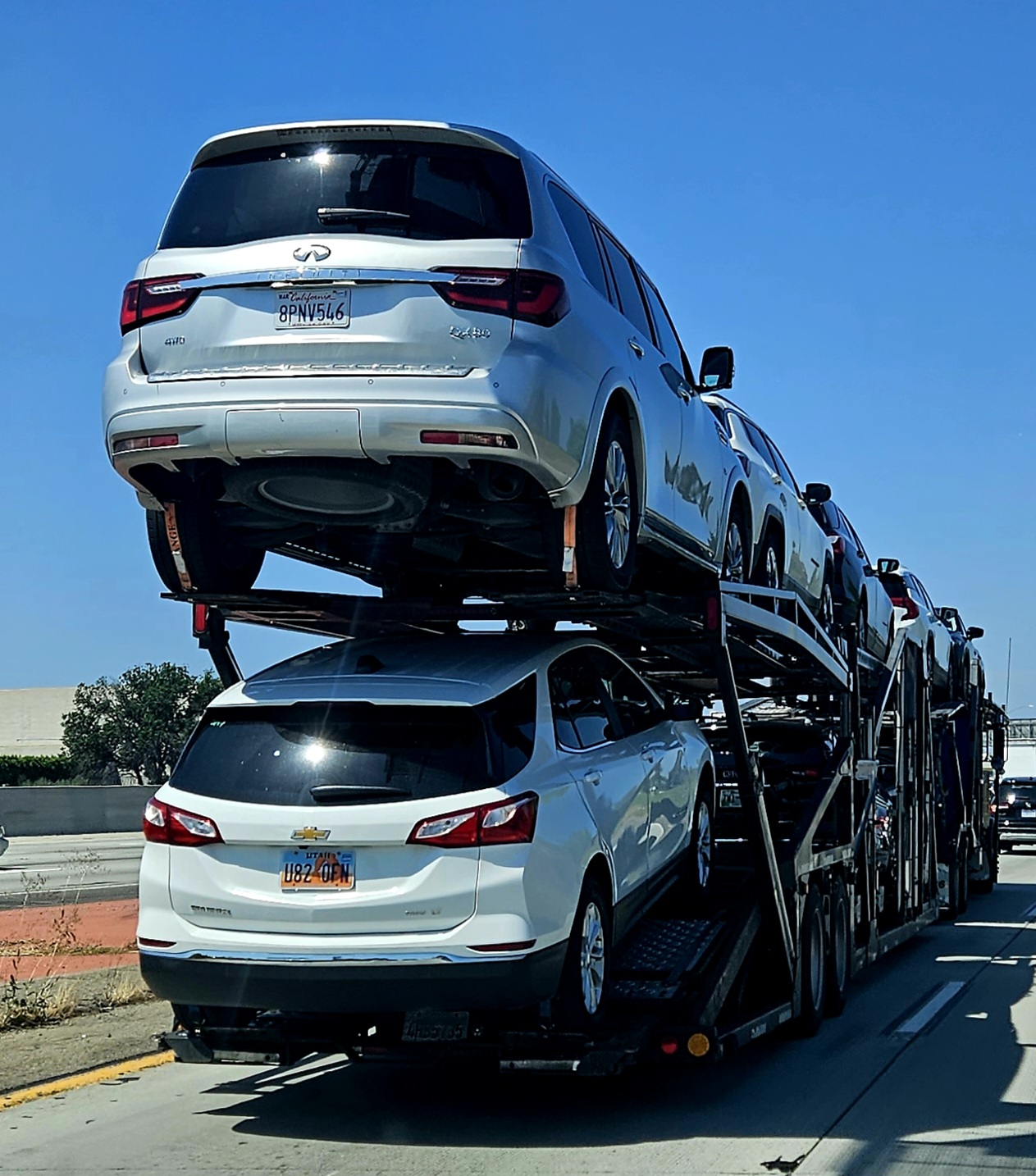
- Open or enclosed trailer. Enclosed transport can add 50% or more.
- Season. April through September is the busy period, and summer prices are higher.
- Pickup and delivery locations. Rural addresses can cost more than big-city routes.
- Condition. A car that does not run needs special handling.
- Speed. Expedited pickup costs extra.
How to ship a car to another state in 7 steps
- Decide whether to ship or drive. Run your numbers in the ship car vs drive calculator before you ask for quotes.
- Get at least three written quotes. Give each company the same details: vehicle, both ZIP codes, dates, and open or enclosed.
- Check the company with the federal regulator. Look up its USDOT and MC numbers before you sign. The section on choosing a company below explains how.
- Choose the service. Pick open or enclosed transport, and door-to-door or terminal-to-terminal delivery.
- Book in writing. Get a contract that states the price, the pickup window, the delivery estimate and the cancellation terms.
- Prepare the car. Leave about a quarter tank of fuel, remove or secure loose parts, turn off the alarm, and photograph every side of the car. Give the driver a spare key and keep the original.
- Inspect at pickup and at delivery. The driver records the car’s condition on a bill of lading at pickup. At delivery, check the car against that record before you sign, and report any damage right away.
Open vs enclosed car transport
| Open carrier | Enclosed carrier | |
|---|---|---|
| What it is | An open multi-car trailer, the kind dealers use | A covered trailer that shields the car from weather and road debris |
| Cost | The standard, lowest-cost option | Can add 50% or more |
| Availability | Most common, so easier to schedule | Fewer trucks, so pickup can take longer |
| Best for | Everyday cars | Classic, luxury or low-clearance cars |
How to choose the best company to ship your car to another state
Most companies that quote you online are brokers. A broker arranges the shipment and hires a carrier, the company that owns the truck. Both are legitimate, but you should know which one you are paying and which one will have your car.
Check the registration
Brokers must register with the Federal Motor Carrier Safety Administration (FMCSA), which assigns them an MC number, and they must keep a $75,000 surety bond or trust fund on file. Carriers that haul cars across state lines for hire need a USDOT number and operating authority. Ask for both numbers and look them up in FMCSA’s SAFER company snapshot, or start with our USDOT number lookup. The name, address and phone number should match what the company gave you.
Ask for proof of cargo insurance
Do not assume your car is covered. FMCSA’s insurance filing chart requires for-hire property carriers to carry liability insurance, but it requires cargo insurance only from household goods movers. A car carrier’s cargo coverage is therefore something you have to confirm yourself. Ask for the certificate of insurance, the coverage limit per vehicle and the deductible. Then call your own auto insurer and ask whether your policy covers the car while it is on a truck.
Red flags
- A quote far below the others.
- A demand for full payment before pickup.
- Payment only by wire transfer, gift card or a cash app.
- No written contract or bill of lading.
- A promise of guaranteed same-day pickup anywhere in the country.
- No USDOT or MC number, or numbers that belong to a different company.
How long does it take to ship a car to another state?
Plan on a pickup window first, then the drive itself. Carriers commonly give a pickup window of three to five days, because the truck is filling a multi-car load along a route.
| Distance | Typical total time |
|---|---|
| Under 500 miles | 3 to 7 days |
| 500 to 1,500 miles | 5 to 10 days |
| Cross-country | 7 to 21 days |
Source: FreightWaves Checkpoint general ranges. These are estimates, not guarantees.
If you are moving, book the car two to three weeks before your move date and keep a rental car or ride budget for the gap. Add the pickup date to your moving out of state checklist.
The cheapest way to ship a car to another state
- Choose an open carrier. It is the lowest-cost standard option.
- Be flexible on dates. A wider pickup window lets a carrier fit you into a load.
- Avoid summer if you can. April through September is peak season.
- Book ahead. Rush pickup costs more.
- Ask about terminal-to-terminal service. Dropping off and collecting the car at a depot can cost less than door-to-door.
- Compare quotes. Prices for the same route vary by hundreds of dollars.
Driving is often cheaper. Kelley Blue Book put a 1,000-mile drive in the same sedan at roughly $500 for fuel, tolls and one motel night, about half the average shipping quote. Shipping makes more sense when you have two cars and one driver, a long cross-country route, a leased car with a mileage cap, or no time to make the drive. The ship car vs drive calculator compares both for your route.
After your car arrives in the new state
Shipping the car does not register it. Your new state sets its own deadlines for a driver’s license, title, registration and insurance. Check new-resident deadlines by state and work through the new resident DMV checklist.
Car shipping FAQs
Can I ship my car to another state?
Yes. Any privately owned car can be shipped between states by a registered auto transport carrier. If the car is leased or financed, tell your lender or leasing company you are moving it, because your contract may require notice.
How much does it cost to ship a car 1,000 miles?
About $1,020 on average for a midsize sedan on an open carrier, with quotes from $800 to $1,350, based on Kelley Blue Book’s January 2026 comparison.
Is my car insured while it is being shipped?
Only if the carrier has cargo coverage or your own policy applies. Federal rules do not require car carriers to file cargo insurance, so ask for the carrier’s certificate and check with your own insurer.
Can I pack belongings in the car?
Ask before you do. Many carriers limit or refuse personal items, and items left inside are usually not covered if they are lost or damaged.
Do I have to be there for pickup and delivery?
You or an adult you choose should be there both times to inspect the car and sign the bill of lading.
Should I pay a deposit?
A small deposit by credit card after a carrier is assigned is common. Be wary of any company that wants a large deposit or the full price before pickup.
Planning guide only. Prices, timing and coverage vary by company and route. Confirm the details in writing before you book.
Useful tools, checklists and moving guides
Use these resources to plan the rest of your move, compare costs and handle arrival paperwork.
Photo credit: Epolk, Wikimedia Commons, licensed under CC BY-SA 4.0. No endorsement implied.