
Full Service Moving Company: What You Get, What It Costs, and How to Pick One
A full service moving company packs your belongings, loads the truck, drives it to your new address, unloads it and puts furniture where you point. You pay for labor, equipment and coordination, and in return you skip the heavy lifting and most of the logistics. For an out of state move, that trade can be worth it, or it can be an expensive habit. This guide shows you which, using 2026 price ranges, federal consumer rules and a vetting routine you can finish in an evening.
Quick answer: published 2026 figures put full service moving anywhere from about $1,200 for a small job to $29,000 for a large one, based on Move.org pricing cited by ThePricer. Most of that spread comes from home size, distance, packing and access problems such as stairs.

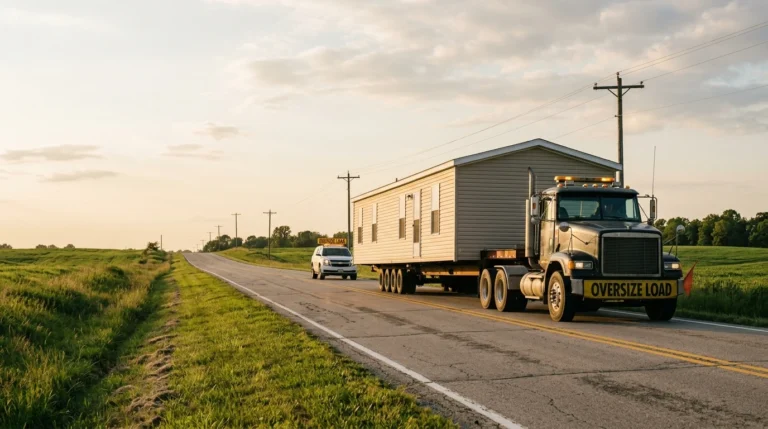
The stages a full service moving company normally covers.
What a full service moving company actually does
Think of it as outsourcing the physical part of moving. A moving company sells transport, labor or both, and a full service mover sells the whole bundle. A crew arrives, wraps furniture in pads, boxes what you have not boxed, loads everything, drives it to your new home and carries it inside.
The label is not regulated, so every company draws the line a little differently. One mover may include beds and tables reassembly, while another charges extra for it. That is why the quote matters more than the marketing page.
What is included and what usually costs extra
Use this table as a quote checklist. The middle column describes what many movers put in the base price, and the right column describes what commonly shows up as a separate line. Your mover may differ on both.
| Task | Often in the base price | Often a separate charge |
| Furniture padding and wrapping | Yes | Custom crating for art or antiques |
| Packing your belongings | Sometimes | Packing labor and boxes, usually itemized |
| Loading and unloading | Yes | Long carry, stairs, elevators |
| Transport to your new address | Yes | Shuttle truck if a big truck cannot reach you |
| Placing furniture in rooms | Yes | Unpacking boxes and removing debris |
| Bed and table disassembly | Often | Wall mounts, large appliances, hot tubs |
| Storage while you wait for closing | No | Storage in transit, billed monthly |
Packing deserves its own line item in your head. Industry publisher FreightWaves lists a full packing add on at roughly $300 to $2,000 or more by home size, and one mover guide puts professional packers at $40 to $70 per person per hour in 2026. Packing is often where a quote quietly doubles.
What a full service moving company costs in 2026
There is no single national price, because movers price local and long distance jobs differently. Local moves usually bill by the hour for a crew and truck. Long distance moves usually bill by shipment weight or volume and mileage, plus extras.
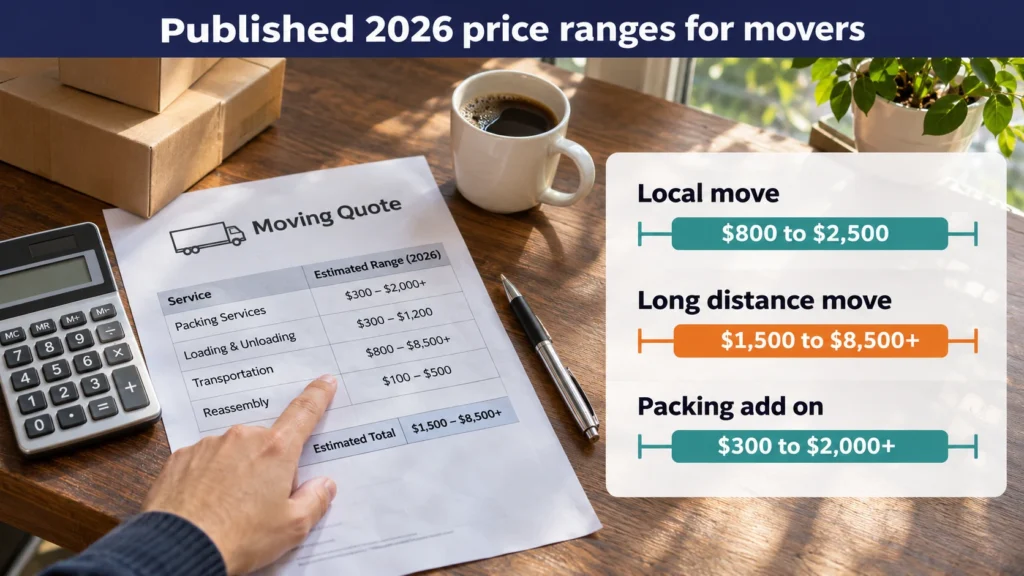
Coastal Moving Services reports a typical local move near $1,400 within a range of $800 to $2,500. FreightWaves gives a wider band of $500 to $3,500 for local jobs and $1,500 to $8,500 or more for long distance moves. Those long distance numbers are floors for a modest home. A four bedroom house crossing the country can land well above them.
Four things move the price most. Weight or volume is first, since more furniture means more crew time and truck space. Distance is second. Services are third, and packing is the biggest swing. Access is fourth, meaning flights of stairs, a long walk from the truck to the door, or an apartment elevator that needs a reservation.
To see how distance changes the math for your own route, run it through OSG’s moving cost by distance tool, then drop the result into the moving budget calculator so it sits beside deposits, travel and a reserve. Our longer breakdown, moving costs explained, covers the line items in more depth.
Binding, non binding or not to exceed: choose your quote type
For interstate moves, federal rules require a mover to give you a written estimate. The type of estimate decides how much surprise your final bill can hold.

A non binding estimate is the mover’s best guess. The final bill follows actual weight and services, but the mover cannot require more than 110 percent of the estimate at delivery. If a $5,000 estimate becomes a $6,200 invoice, you pay $5,500 to get your goods and the mover may bill the rest later, with payment due within 30 days.
A binding estimate fixes the price for the items and services listed, so weight changes do not move it. A not to exceed estimate follows actual weight but sets a ceiling, which means it can fall below the quote and never rise above it for the quoted work. Added services, such as a stair carry nobody mentioned, can still change any of the three.
A phone quote or verbal rate is not an estimate. Without something in writing you lose the 110 percent protection, so ask for an in home or video survey and get the result on paper.
What happens if the mover breaks something
Federal rules require interstate movers to offer two liability options, and the difference is large. Released value is the basic level at no extra charge, and it pays 60 cents per pound per article. A 50 pound television is worth $30 under that rule, whatever you paid for it. Full value protection costs more, and the mover repairs the item, replaces it or pays a cash settlement based on the plan’s terms.

Take a 180 pound dining table that cracks and needs a $600 repair. Released value pays $108. Full value protection could cover the repair. Ask for the written plan, find any deductible and read what it excludes. These plans are valuation coverage, not insurance in the legal sense, so some families add separate third party insurance for jewelry, electronics or antiques.
Is a full service mover worth it for your move?
It is worth it when the price buys back time, health and risk that you value more than the savings. It is a weaker deal when you have little furniture, a short distance and plenty of help.
Full service tends to fit a household that has a tight start date at a new job, young children, a home with heavy furniture or stairs, or limited physical ability to lift. It also suits anyone relocating several states away, because a rental truck adds fuel, tolls, hotel nights and a long drive on top of loading and unloading.
It fits less well for a studio apartment, a move under a few hundred miles with friends available, or a tight budget where only a few large pieces need professional hands. In those cases a labor only crew, a portable container or a truck rental can cost far less. OSG’s DIY versus movers calculator compares the cash costs side by side, and the guide to truck and container options explains the middle ground.
A hybrid often wins on price. Pack the boxes yourself, let the crew handle furniture and the truck, and keep the packing line off the quote.
Full service, labor only, container or truck: how the options compare
Most people searching for a full service moving company are really choosing between four ways to move. Seeing them together makes the decision less emotional and more mathematical.
| Option | Who does the work | Price position | Best fit |
| Full service movers | The crew packs, loads, drives and unloads | Highest | Long hauls, large homes, tight timelines |
| Labor only movers | You rent the truck, they load and unload | Middle | Heavy furniture with a short drive |
| Portable container | You pack and load, the company drives it | Middle to low | Flexible dates, one way moves |
| Rental truck | You do everything including the driving | Lowest cash cost | Small homes, short distance, strong helpers |
Cash price is only half the comparison. A truck rental adds fuel, tolls, lodging and a day or two of driving, and the unpaid labor is yours. Price your own time before you decide the cheaper option is truly cheaper.
How to check a mover before you book
Start with identity. Every interstate household goods mover needs a USDOT number and operating authority from the Federal Motor Carrier Safety Administration, and the mover’s MC number should match. FMCSA advises avoiding movers whose advertising does not show a USDOT number. Look up both numbers in the agency’s SAFER system and confirm the status shows authority for household goods, not inactive or revoked.

Six checks that take about an hour and can prevent most disasters. (File: full-service-moving-company-vetting-checklist.webp)
Next, compare names. The company on the estimate, the truck and the FMCSA record should all match. A name that changes between the website and the contract is a warning sign. Ask who actually does the move, because some brands act as brokers and hand the job to another carrier. Brokers must register with FMCSA too.
Then read the estimate line by line. You want an itemized price, the valuation option in writing, and a clear statement of what happens if you add items. Interstate movers must also tell you about their dispute settlement program before the move, so ask for it. Finally, be cautious with a large deposit or a demand for cash. For vetting steps that apply to any move, OSG’s guide on how to hire interstate movers goes further.
A booking timeline for an out of state move
| When | What to do |
| 8 to 10 weeks out | Request three written estimates and check each mover’s FMCSA record |
| 6 weeks out | Book your mover, choose the valuation option and confirm pickup and delivery windows |
| 4 weeks out | Decide what to sell or donate, since less weight lowers the bill |
| 2 weeks out | Reserve elevators, parking and loading space at both homes |
| Moving week | Photograph valuables, keep documents and medicines with you, confirm the crew arrival time |
| Delivery day | Check items against the inventory, note damage on the paperwork before the crew leaves |
Summer and month end are the busiest periods, so book earlier then. Use the moving out of state checklist to line this schedule up with address changes, utilities and school records.
Mistakes that cost families money
Accepting the cheapest quote is the classic one. A low number often leaves out packing, stairs or valuation, and the bill catches up later. Compare the same services across all quotes before you compare price.
Skipping the inventory is another. The inventory is your record of what went on the truck, so read it before you sign and again at delivery. Paying in full before delivery is a third mistake, because you want leverage if something is wrong. Last, many families forget storage timing. If your closing date slips, ask what storage in transit costs per month before you need it, and compare it with OSG’s storage cost calculator.
Where to go from here
Pick three movers, ask each for a written estimate based on a home or video survey, and compare them on services, valuation and estimate type rather than the headline price. Once you have a winner, plan your arrival with the first 30 days after moving guide so the boxes are not the only thing that arrives on time.
Frequently asked questions
What is a full service moving company?
It is a mover that handles packing, loading, transport, unloading and furniture placement under one contract. Some also handle unpacking and storage. Check each service in the written estimate because companies define the term differently.
How much does a full service moving company cost?
Published 2026 ranges run from about $1,200 for a small job up to $29,000 for a large one. Local jobs often bill hourly, while long distance jobs bill by weight or volume and mileage. Your binding or not to exceed quote is the only number that matters.
Does a full service mover provide boxes and packing?
Many do, but packing is usually an itemized add on. Packing labor and materials often run into the hundreds or thousands of dollars, so ask for them as separate lines.
Are tips expected for full service movers?
Tipping is customary but optional and not part of the quote. Many families tip per crew member based on the length and difficulty of the job, and give cash on delivery day.
What is the 110 percent rule for movers?
On a non binding interstate estimate, the mover cannot require more than 110 percent of the estimate at delivery. You pay that amount to get your goods, and the mover may bill the remainder within 30 days.
Is a full service mover better than renting a truck?
It is better for time, effort and damage risk, and often competitive on long hauls once fuel, lodging and your own labor are counted. A truck or container usually wins on price for small, short moves.
How far ahead should I book?
Six to eight weeks for an interstate move is a safe target, and longer in summer or at month end. Last minute bookings leave fewer choices and weaker negotiating room.