Auto Shipping California to New York: What It Costs, How Long It Takes, and How to Book Safely
If you are moving across the country, the car is often the last thing you plan and the first thing you miss. Auto shipping from California to New York is one of the longest routes in the country at roughly 2,800 to 2,900 miles, and the price you see depends heavily on who is quoting it.
This guide gives you a realistic budget, an honest timeline, a drive-versus-ship comparison, and the New York steps that start the day your car arrives.
Quick answer
- Typical cost: about $1,300 to $2,900 for a standard sedan on an open carrier. Published ranges from different companies vary a lot, so plan on the middle of that spread and treat a very low quote with caution.
- Typical time: 7 to 14 days from pickup to delivery. Some companies advertise 4 to 9 days, and some editorial sites list up to 15.
- Best value method: open carrier. Enclosed costs roughly 70% to 80% more on the example figures below.
- Most important check: confirm who actually hauls the car and look up their federal registration before you pay a deposit.
What does auto shipping from California to New York cost?
For a standard sedan on an open carrier, expect roughly $1,300 to $2,900. That is a wide range, so here is how the published figures line up.
| Source (as published) | Range for CA to NY |
|---|---|
| Sherpa Auto Transport | $1,300 to $1,825 |
| AmeriFreight (open carrier) | $1,300 to $1,500 |
| SAKAEM (sedan, relocation guide) | $1,325 to $1,750 |
| SGT Auto Transport | $1,200 to $1,700 |
| FreightWaves Checkpoint | $1,826 to $2,754 |
| MoveBuddha (San Francisco to NYC) | $1,805 to $2,893 |
| AmeriFreight (enclosed carrier) | $2,275 to $2,625 |
Notice the pattern. Company route pages cluster at the low end, and review sites that track more quotes land higher. That is not proof of anything, but it is a reason to budget for the upper half of the range and be happy if the final number comes in lower.
A practical budget rule from OSG: for a sedan on an open carrier, plan for about $2,000, and plan for about $2,800 or more if you drive an SUV, a truck, or a car that does not run. MoveBuddha’s guide lists $2,444 to $3,620 for larger vehicles.
Why two quotes for the same route can differ by $1,000
The route is the same, so the gap comes from a few things.
- Teaser pricing. A quote built to win the click may sit below what carriers will accept. The car then waits, and the price gets “adjusted” days later.
- Pickup window. A flexible window gives carriers more routing options. Sherpa points out that a five-day window often lowers the cost.
- Season. SAKAEM reports that the gap between low-cost winter and peak summer on this route can approach 25%.
- Origin city. The same source says Bay Area and Sacramento pickups can run $100 to $250 higher than Southern California because most carrier capacity loads in the Los Angeles area.
- Vehicle size and condition. Larger vehicles and non-running cars cost more.
- Delivery city. Upstate New York is not automatically cheaper than New York City. Carrier availability and route density can cancel out the shorter distance.
How long does it take?
The honest answer is two clocks, not one.
- Clock 1, the pickup wait. From booking to pickup can take a few days to a couple of weeks, especially if your window is tight.
- Clock 2, the road time. Once loaded, a carrier covers the route in roughly 4 to 9 days of driving, with extra time when other cars are dropped off along the way.
Putting both together, most customers should plan on about 7 to 14 days door to door. AmeriFreight and Navi both cite 7 to 10 days, and FreightWaves and MoveBuddha list up to 15. If your lease starts on a fixed date, add a buffer of a few days. Carriers cannot guarantee exact delivery dates, and winter weather on northern routes can slow things down.
Should you ship the car or drive it?
Driving 2,800 miles takes about four to five days at a comfortable pace, and the cost adds up faster than most people expect. Compare the full list instead of just gas.
| Cost item | Ship | Drive |
|---|---|---|
| Transport fee | $1,300 to $2,900 | $0 |
| Fuel | $0 | Miles divided by mpg, times price per gallon |
| Hotels and meals | $0 | Nights on the road times a daily cost |
| Wear, oil, tires | $0 | Mileage-based cost |
| Flight to New York | Yes, one ticket | Often a flight home or a second trip |
| Time off work | Minimal | Often 4 to 6 days |
| Risk to the car | Handling and road debris | Accident, breakdown, wear |
Worked example (illustrative numbers, replace with your own): a car that gets 28 mpg uses about 100 gallons over 2,800 miles. At $3.50 a gallon that is about $350 in fuel. Add four hotel nights at $130 ($520), meals at $60 a day for five days ($300), and a return flight of $250. The total is about $1,420 before wear and lost time. Shipping at $1,800 looks more expensive on paper, but once you add your time off and the extra miles on the car, the gap shrinks. Driving usually wins for a second driver who wants the trip, and shipping usually wins when you are moving a family or on a deadline.
Open or enclosed carrier?
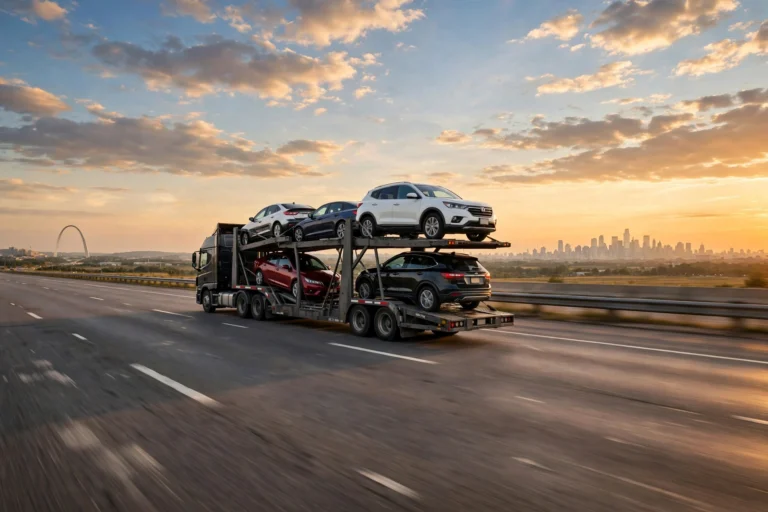
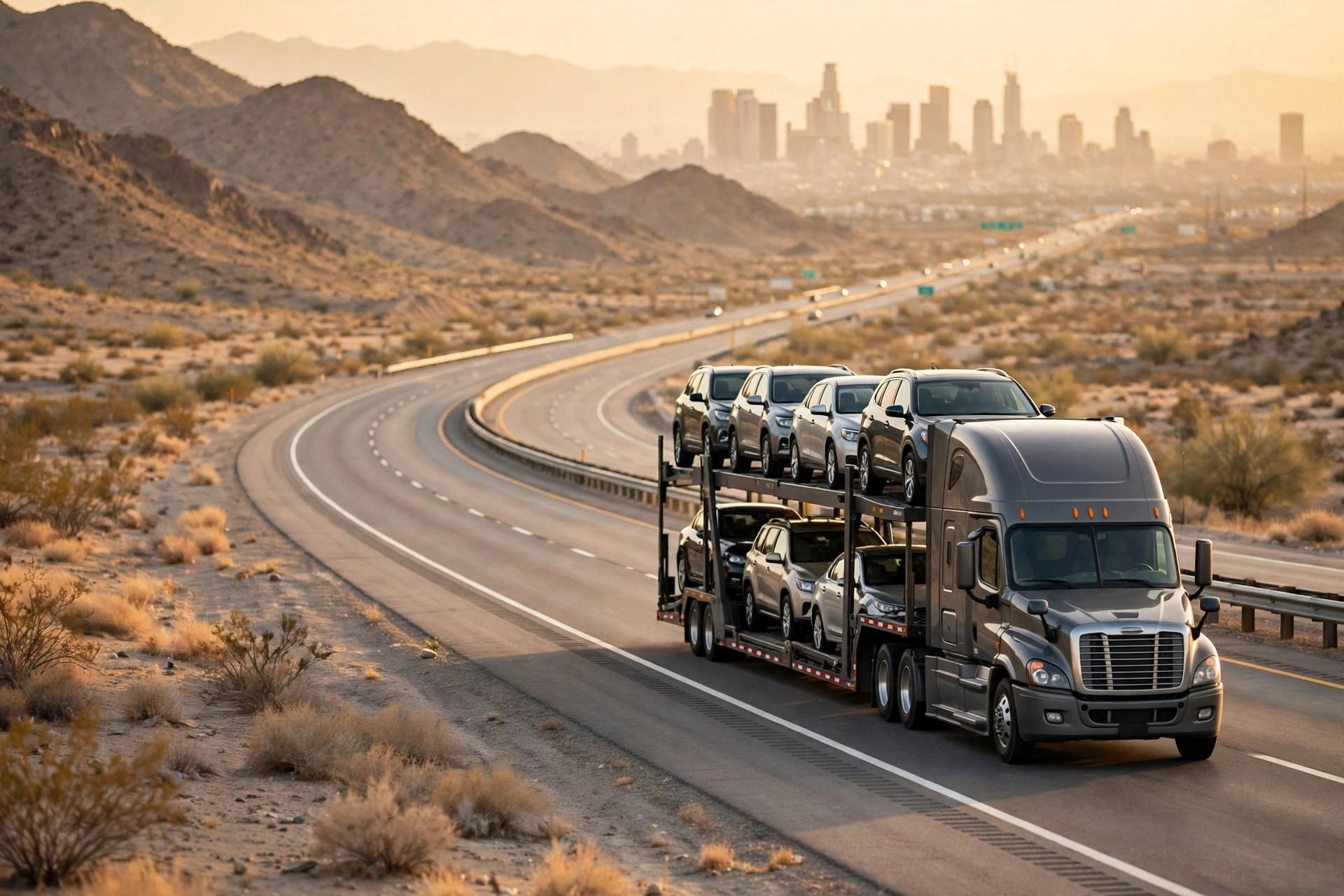
- Open carrier: the standard. Cars ride on a visible, multi-level trailer and are exposed to weather and road debris. It is the lowest price and the most available option on this route.
- Enclosed carrier: the car travels inside a covered trailer. AmeriFreight lists $2,275 to $2,625 for this route against $1,300 to $1,500 open, a premium of roughly 75%. It is worth considering for classic, exotic, or low-clearance vehicles.
For a normal daily driver, open is the sensible choice.
Who are you actually hiring? Broker vs carrier
Most companies that answer a quote request are brokers. They do not own trucks. They arrange the shipment with an independent carrier, the company with the truck and driver. This is a normal model, but it changes the questions you should ask.
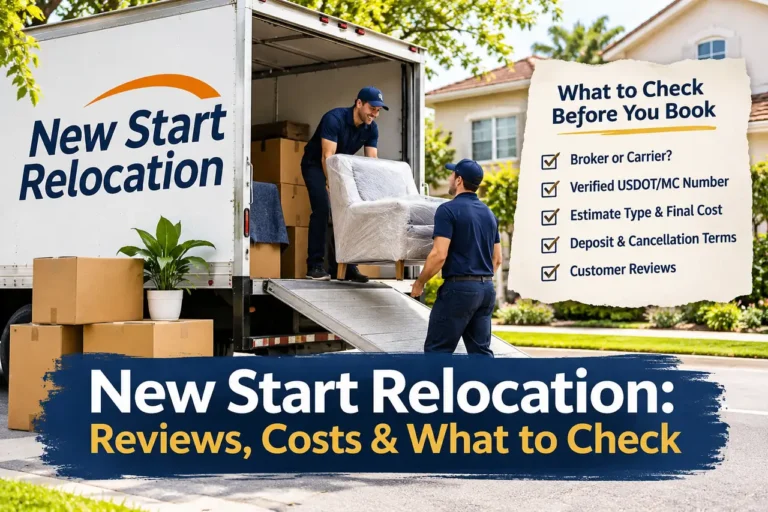
Brokers and carriers must be registered with the Federal Motor Carrier Safety Administration (FMCSA). You can look up a company’s registration on the FMCSA SAFER system at safer.fmcsa.dot.gov.
Five checks before you pay a deposit:
- Ask for the company’s MC number and USDOT number and confirm them in SAFER.
- Ask whether they are the broker or the carrier.
- Ask for the carrier’s name before pickup and confirm it matches the registration record.
- Get the cargo insurance coverage in writing. FMCSA records can help verify registration and some financial responsibility filings, but they do not replace a written explanation of the carrier’s cargo coverage (ConsumerAffairs makes the same point).
- Read the cancellation and deposit terms. Be wary of any company that wants full payment before a carrier is assigned.
Your booking timeline
This timeline is OSG’s suggested planning order, not an industry rule.
| When | What to do |
|---|---|
| 4 to 6 weeks before | Collect two or three quotes. Run the check above. Decide open or enclosed. |
| 2 to 3 weeks before | Book and set a pickup window of at least three to five days. |
| 1 week before | Clean the car, photograph it, and remove personal items and toll tags. Keep the gas tank low. |
| Pickup day | Walk around the car with the driver and sign the bill of lading only after the condition report matches what you see. |
| Delivery day | Inspect in daylight before signing. Note any new damage on the paperwork before the driver leaves. |
Prep checklist
- Wash the car so existing marks are visible in photos.
- Take dated photos from all sides, plus the odometer.
- Remove loose items and anything valuable. Ask the company in writing what personal items it allows.
- Keep the gas tank about one quarter full.
- Fix leaks, and make sure the battery and brakes work.
- Give the driver a spare key. An adult must be present at pickup and delivery, and most companies require 18 or older.
- Note any alarm instructions and the car’s quirks.
What to do when the car arrives in New York
New York’s DMV requires you to register a vehicle within 30 days of becoming a resident, and you also have 30 days to get a New York driver license. New York’s DMV also offers a 10-day inspection extension sticker for out-of-state vehicles, and you put it on the car when you enter New York State, not before. Check the current steps on the New York DMV page for registering an out-of-state vehicle before your first appointment.
- Line up New York insurance before you register.
- Bring your title or registration, proof of insurance and ID.
- Schedule the safety inspection once registered.
- Ask the California DMV what to do with your old plates and registration.
The shipping date should land before your DMV window closes, not after.
Common mistakes to avoid
- Booking the lowest quote without asking why it is low.
- Setting a one-day pickup window and paying for it.
- Skipping the condition report at pickup.
- Leaving personal items in the car without confirming the policy.
- Forgetting that the car may arrive before you have a parking spot in New York City.
- Treating the delivery estimate as a promise.
FAQ
What is the cheapest month to ship a car from California to New York?
Winter is usually the lowest-priced stretch, and AmeriFreight says April, May, September and October offer better availability. SAKAEM reports the winter to summer gap can approach 25%.
Do I have to be there for pickup and delivery?
Someone aged 18 or older generally has to be present at both ends, though it does not have to be you. Confirm the company’s rule.
Can I pack things in the car?
Many companies limit or ban personal items because of weight and insurance. Ask in writing before you load anything.
Is shipping to upstate New York cheaper?
Not always. Buffalo, Rochester and Albany can cost about the same as New York City because carriers run denser routes into the city.
How do I check that a company is legitimate?
Look up its MC and USDOT numbers on the FMCSA SAFER site and confirm it matches the company name and address on your quote.
Should I pay a deposit?
Some companies charge one after a carrier is assigned, which is a better sign than a fee taken just to search. Read the refund terms first.
What if the car arrives damaged?
Note it on the bill of lading before signing, photograph it, and contact the carrier and the broker quickly. Keep your pickup photos.
Do I need extra insurance?
Ask the carrier’s cargo coverage in writing, then check with your own auto insurer about what your policy covers while the car is in transit.